
A cleanroom air filtration system usually uses multiple filter stages. Pre-filters protect the HVAC system, medium filters reduce load on high-efficiency filters, and HEPA or ULPA filters provide terminal clean air for controlled spaces. The stages should be selected as one system, not as separate parts purchased only by price.
For buyers, staged filtration affects energy cost, maintenance frequency, filter life and validation stability. A quotation should show filter grades, airflow, resistance, replacement access and how each stage protects the next. Without that view, the cleanroom may pass initially but become expensive or unstable to operate.
Purpose of Staged Filtration
Staged filtration removes larger particles before air reaches expensive high-efficiency filters. This protects HEPA filters from early loading and keeps airflow more stable across the maintenance cycle. It also helps the HVAC system operate with more predictable resistance instead of forcing terminal filters to handle all particle load.
The number and type of stages depend on outdoor air quality, recirculation ratio, process particle generation and required room class. A simple room may use fewer stages, while pharmaceutical, semiconductor or high-dust processes need more careful filtration planning. The goal is stable cleanliness with reasonable maintenance cost.
Pre-Filter Role
Pre-filters capture larger dust and protect coils, fans and ductwork. They are usually easier and cheaper to replace than terminal HEPA filters. If pre-filters are neglected, downstream filters load faster and the system may lose airflow or require higher fan power.
Pre-filter maintenance should be based on pressure drop and operating environment. Sites with dusty outdoor air, frequent door opening or nearby construction may need closer inspection. A clean pre-filter stage is one of the simplest ways to extend the life of the entire filtration system.
Medium Filter Role
Medium filters bridge the gap between pre-filters and terminal HEPA filters. They reduce fine particle load and help stabilize pressure drop across the system. Their selection depends on outdoor air quality, return air condition and process risk.
Medium filters are often overlooked because they are less visible than HEPA filters, but they strongly affect operating cost. If they are underspecified, terminal filters load too quickly. If they are oversized or too restrictive, fan energy may rise. The right balance should be reviewed with the HVAC design.
HEPA Terminal Filtration
HEPA filters are commonly installed at terminal supply points or inside FFUs. Terminal filtration provides clean air close to the room and must be installed with proper sealing, access and integrity testing. The installed assembly is what matters for validation, not only the filter certificate.
Terminal filtration should be planned together with air distribution. A high-quality filter cannot compensate for poor airflow pattern, blocked supply area or uncontrolled return path. Room layout, ceiling coverage, process heat load and maintenance access all influence final performance.
Replacement Sequence
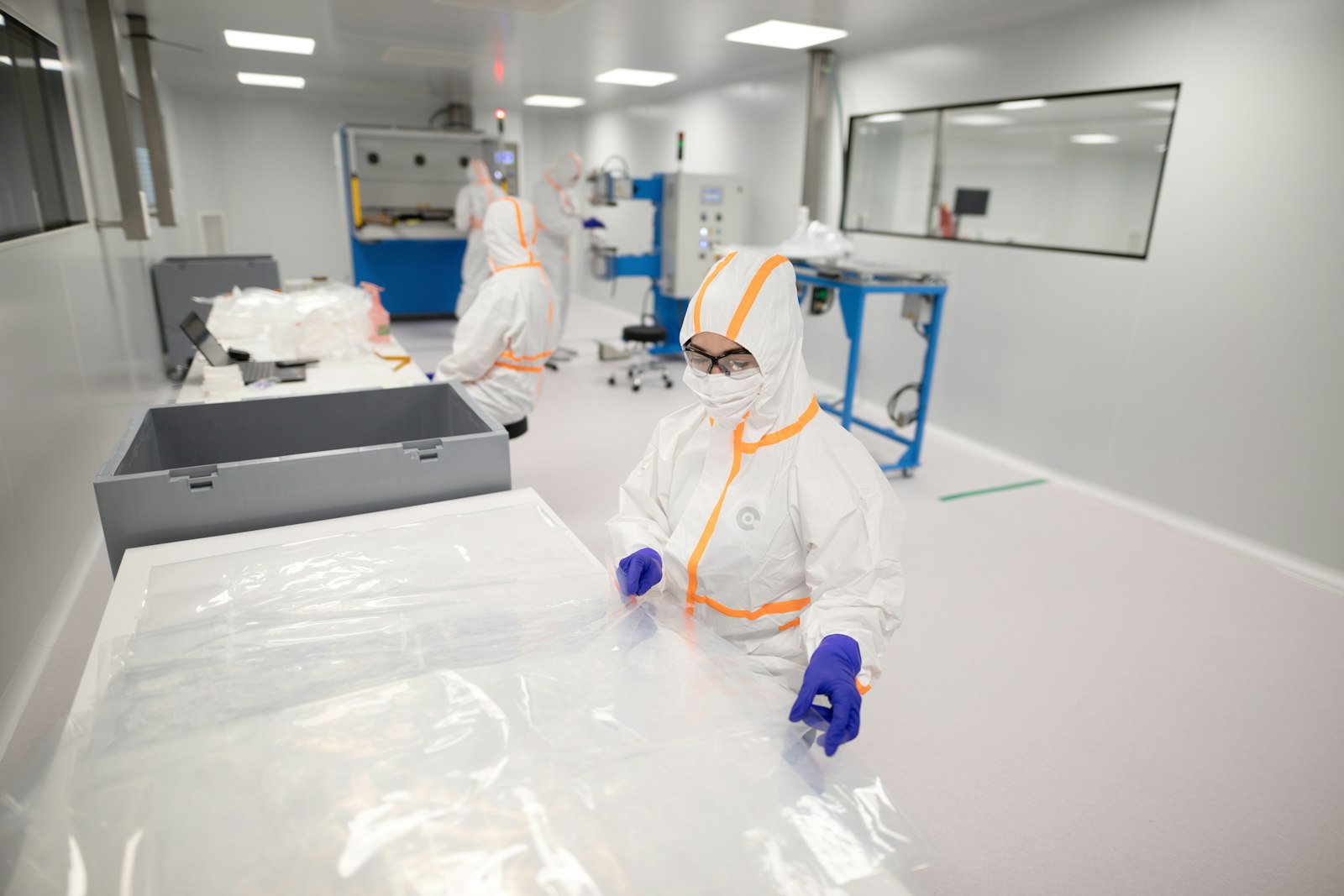
Replacement planning should protect the most expensive filters and reduce unnecessary cleanroom downtime. Upstream filters are usually replaced more often because they carry more dust load and are easier to access.
- Monitor pre-filter and medium filter pressure drop.
- Replace upstream filters before they overload HEPA filters.
- Record HEPA resistance after commissioning.
- Retest after HEPA replacement.
Hurricane Techs Recommendation
Design filtration as part of the HVAC and validation plan. The filter schedule should explain why each stage is selected, how resistance will be monitored and how replacement will be performed without disturbing cleanroom performance.
Hurricane Techs supports cleanroom AHUs, FFUs and HEPA / ULPA filters for projects that need filtration design connected to cleanroom classification and maintenance.
FAQ
Why use pre-filters before HEPA?
They protect HEPA filters and reduce maintenance cost.
Does every cleanroom need FFU?
No. Some use AHU terminal HEPA systems, while others use FFUs or hybrid designs.
How does filtration affect energy use?
Higher resistance requires more fan power, so filter loading and replacement planning affect energy cost.


